한양대학교 스포츠혁신동역학연구실(SID Lab)이 2026년 10월 23일부터 25일까지 중국 닝보에서 열린 제7회 세계 라켓스포츠과학 학술대회(WRSSC 2026)에서 디지털 탁구 훈련 연구를 발표했다. 연구진은 10주간의 수업에서 연습 순서와 표적 제시 방식이 탁구 수행에 어떤 영향을 미치는지 살폈다.
한양대학교 체육학과 박사과정 Zhengyi He가 연구 결과를 발표했다. 한양대 체육학과의 Siddhartha Bikram Panday 교수가 교신저자로 참여했다.
주요 연구 내용
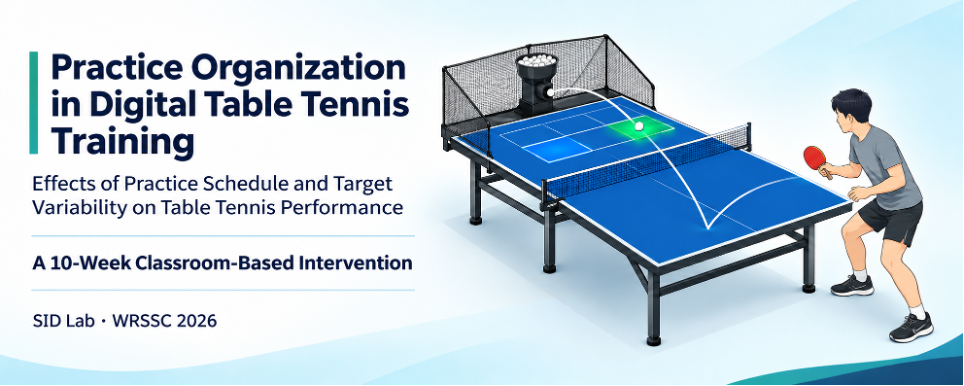
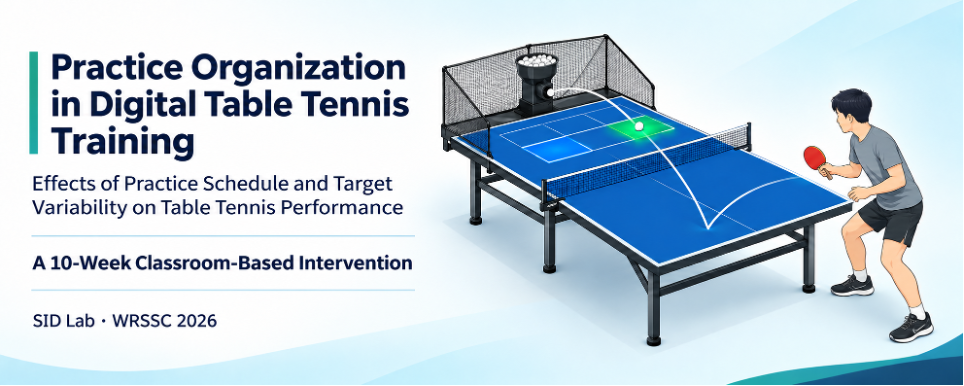
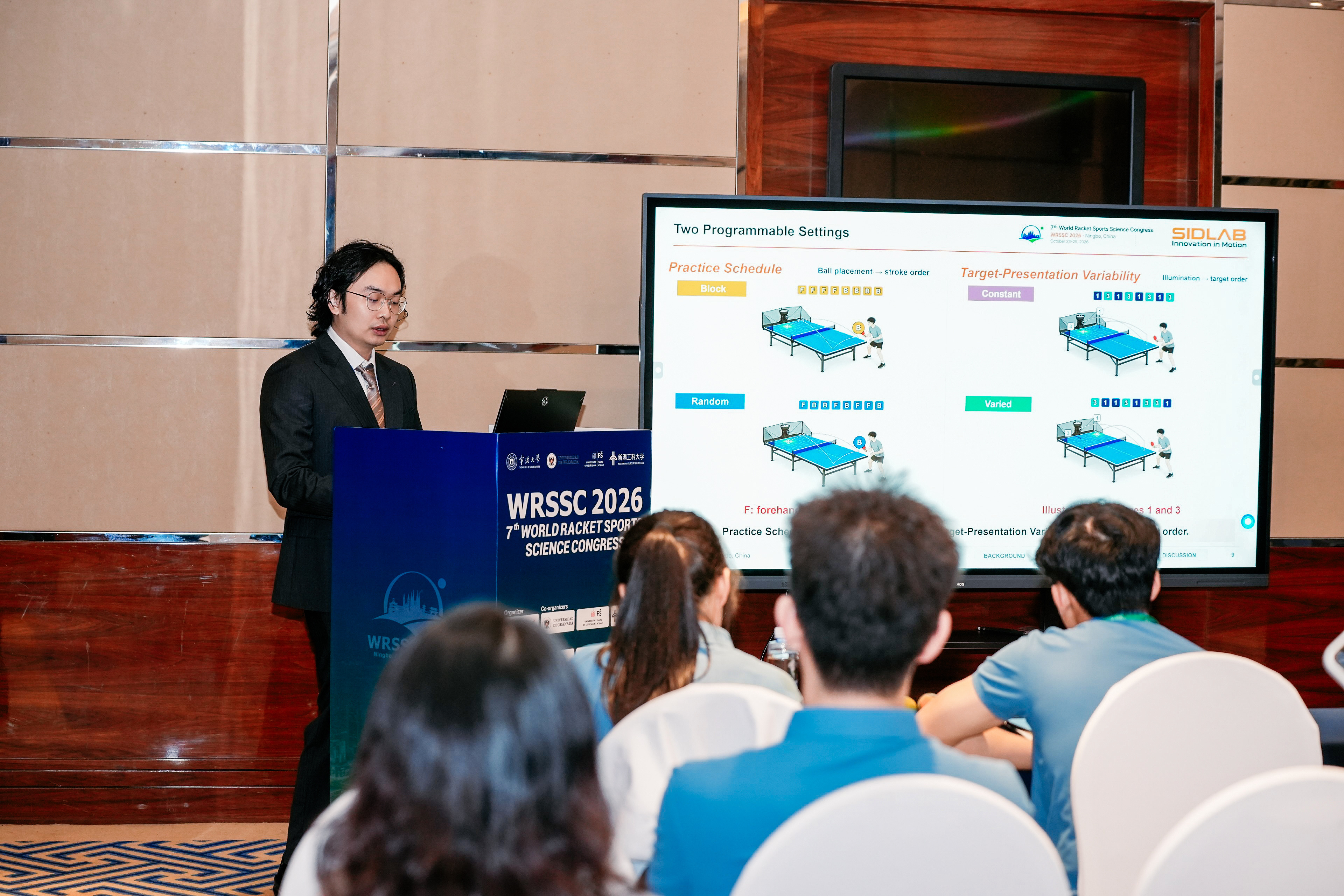
연구진은 Fastpong 디지털 탁구 훈련 시스템을 활용해 블록 연습과 무작위 연습, 고정 표적과 변동 표적을 조합한 네 가지 조건을 비교했다. 시스템은 타구 순서를 설정하고 LED 표적을 제시하며 수행 결과를 기록했다. 10주간의 중재를 완료한 참가자 45명을 대상으로 타구 방향 판단, 정확도, 반응시간을 평가했다.
주요 연구 결과
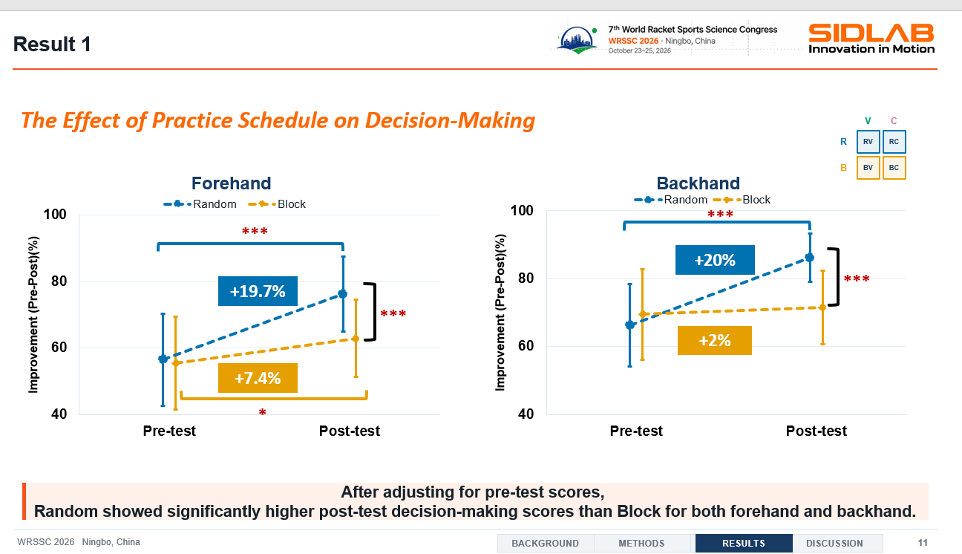
타구 방향 판단 사전 점수를 보정한 결과, 무작위 연습의 사후 점수가 블록 연습보다 포핸드와 백핸드 모두에서 유의하게 높았다.
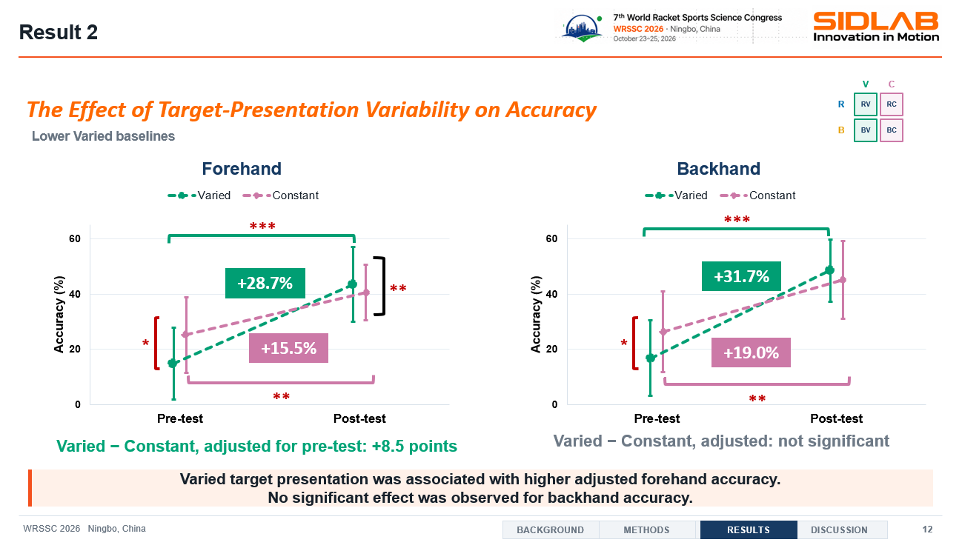
타구 정확도 사전 점수를 보정한 포핸드 정확도는 변동 표적 조건에서 고정 표적 조건보다 유의하게 높았다. 백핸드 정확도의 차이는 통계적으로 유의하지 않았다.
반응시간 연습 순서와 표적 변동성 모두 측정된 반응시간에 통계적으로 유의한 영향을 보이지 않았다.
연구의 의의
이번 연구는 디지털 탁구 훈련에서도 연습 순서와 표적 제시 방식에 따라 서로 다른 수행 지표가 달라질 수 있음을 보여준다. 대학 연구진과 Fastpong의 협업을 통해 실제 수업 환경에서 훈련 조건을 설정하고 수행을 기록해 비교했다.
학술대회 발표 및 연구진
발표 제목 Practice Organization in Digital Table Tennis Training: Effects of Practice Schedule and Target Variability on Table Tennis Performance — A 10-Week Classroom-Based Intervention
발표자 Zhengyi He (한양대학교 체육학과 박사과정)
교신저자 Siddhartha Bikram Panday (한양대학교 체육학과 부교수, SID Lab)
공동저자 Xinghan Li (한양대학교 체육학과 박사과정), Jongchul Park (국립부경대학교 해양스포츠학과), Amir Kamandi (Fastpong Inc. 연구개발부), Angelita Cruz (계명대학교 체육학과)

Translated Version
SID Lab Presents Digital Table Tennis Training Research at WRSSC 2026
The Sports Innovation & Dynamics Lab (SID Lab) at Hanyang University presented its research on digital table tennis training at the 7th World Racket Sports Science Congress (WRSSC 2026), held October 23–25 in Ningbo, China. The 10-week classroom study examined how practice schedules and target presentation affect table tennis performance.
Zhengyi He, a Ph.D. candidate in Hanyang University’s Department of Physical Education, presented the study. Siddhartha Bikram Panday of the same department was the corresponding author.
Research Overview
Using the Fastpong digital table tennis training system, the researchers compared four conditions combining blocked or random practice with constant or varied target presentation. The system programmed stroke sequences, displayed LED targets, and recorded performance. Forty-five participants completed the 10-week intervention. The researchers assessed directional decision-making, shot accuracy, and reaction time.
Key Research Findings
Directional decision-making After adjustment for pre-test scores, the random-practice group scored significantly higher at post-test than the blocked-practice group for both forehand and backhand strokes.
Shot accuracy Adjusted forehand accuracy was significantly higher with varied targets than with constant targets. The corresponding difference in backhand accuracy was statistically nonsignificant.
Reaction time Neither practice schedule nor target variability showed a statistically significant effect on the measured reaction times.
Research Significance
The study suggests that how digital practice is organized can influence specific aspects of performance. The collaboration between university researchers and Fastpong enabled the team to program, record, and compare training conditions in a classroom setting.
Conference Presentation and Research Team
Presentation title Practice Organization in Digital Table Tennis Training: Effects of Practice Schedule and Target Variability on Table Tennis Performance — A 10-Week Classroom-Based Intervention
Presenting author Zhengyi He (Ph.D. candidate, Department of Physical Education, Hanyang University)
Corresponding author Siddhartha Bikram Panday (Associate Professor, Department of Physical Education, Hanyang University, and SID Lab)
Co-authors Xinghan Li (Ph.D. student, Department of Physical Education, Hanyang University), Jongchul Park (Department of Marine Sports, Pukyong National University), Amir Kamandi (Department of Research and Development, Fastpong Inc.), and Angelita Cruz (Department of Physical Education, Keimyung University).
학술대회 발표 자료
WRSSC 2026 Presentation Figures