
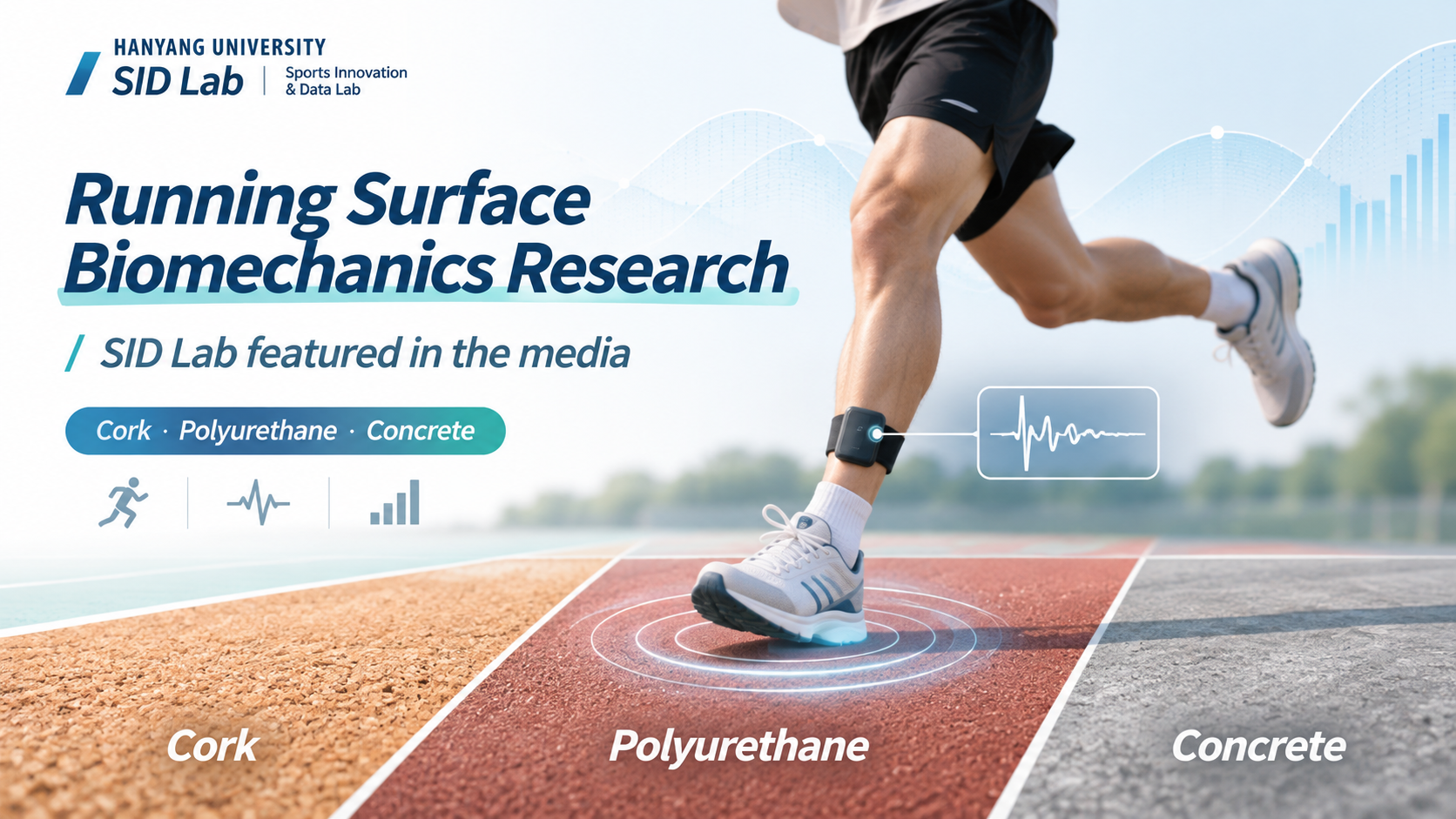
한양대 SIDLAB 러닝 노면 생체역학 연구, 경기일보 집중 조명
한양대학교 (Sports Innovation & Dynamics Laboratory, SID Lab)의 시다르타 비크람 판데이 교수가 참여한 연구가 2026년 11월 11일 경기일보의 기획보도 「달림이 1천만 시대」에 소개됐다.
이번 보도에서는 러닝 인구 증가에 따른 안전한 운동 환경 조성의 필요성을 다루며, 다양한 노면 재질이 보행 및 달리기 시 인체에 미치는 생체역학적·생리학적 영향을 조명했다.
주요 연구 내용
한양대학교, 대림대학교, 여주대학교 공동연구진은 코르크(Cork), 우레탄(Polyurethane), 콘크리트(Concrete)의 세 가지 바닥 재질에서 보행 및 달리기 시 나타나는 신체 반응을 비교·분석했다.
건강한 성인 남성 4명을 대상으로 수행한 반복측정 파일럿 연구로, 경골 가속도(Tibial Acceleration), 심박수(Heart Rate), 산소섭취량(Oxygen Consumption)을 주요 평가변수로 활용했다.
주요 연구 결과
- 달리기 시 경골 가속도
- 코르크: 8,500.67 mG
- 콘크리트: 8,850.24 mG
- 우레탄: 9,422.36 mG
보도에서 제시된 평균값을 기준으로 우레탄 노면의 경골 가속도는 코르크보다 약 10.8% 높았다.
- 보행 시 경골 가속도
- 코르크: 3,374.76 mG
- 콘크리트: 3,886.83 mG
- 우레탄: 4,048.90 mG
보행 조건에서는 코르크 노면에서 상대적으로 낮은 경골 가속도가 관찰됐다.
- 달리기 시 평균 심박수
- 코르크: 161.53 bpm
- 우레탄: 169.24 bpm
- 콘크리트: 170.98 bpm
노면 재질에 따라 측정된 평균 심박수에도 차이가 나타났다.
다만 본 연구는 소규모 파일럿 연구로, 특히 달리기 조건에서는 참가자별 반응에 차이가 있었다. 따라서 특정 노면이 모든 러너에게 일관되게 유리하다고 단정하기보다는 추가적인 검증이 필요하다.
연구의 의의
본 연구는 노면 재질에 따른 경골 충격과 생리학적 반응을 정량적으로 평가함으로써 보행 및 러닝 환경의 과학적 설계를 위한 기초자료를 제시했다.
특히 러닝 인구 증가에 따라 노면의 충격 완화 특성, 안정성 및 유지관리의 중요성이 강조되고 있는 상황에서, 스포츠 생체역학 연구 결과를 실제 운동 환경 개선에 활용할 수 있는 가능성을 보여준다.
SID Lab은 앞으로도 인체 움직임 분석, 스포츠 노면 및 신발의 생체역학적 성능 평가를 통해 보다 안전하고 효율적인 운동 환경 조성에 기여하고자 한다.
관련 연구 논문
논문명: 바닥 재질에 따른 생체역학 및 생리학적 비교: 코르크·우레탄·콘크리트 기반 반복측정 파일럿 연구
저자: 김국현, 헝개린, 방주, 안을섭, 고재곤, 시다르타 비크람 판데이
학술지: 체육과학연구, 37(1), 113–122 (2026)
DOI: https://doi.org/10.24985/kjss.2026.37.1.113
언론보도
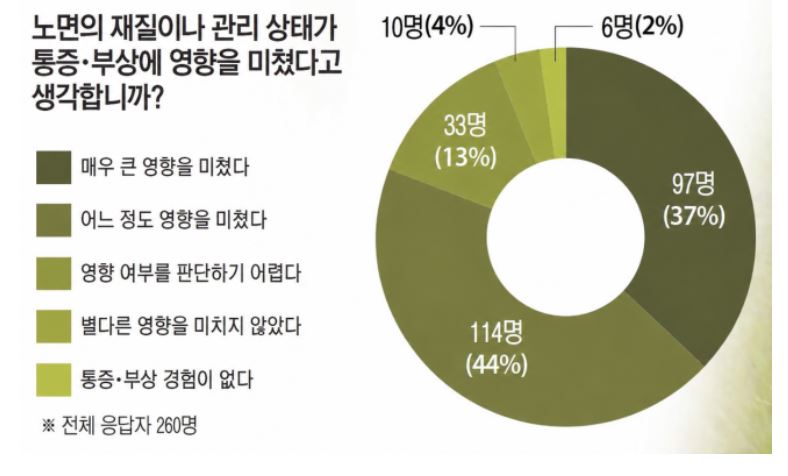
언론사: 경기일보 보도일: 2026년 11월 11일 기사명: 노면부터 동선까지, 러너 260명 말한 ‘달리기 좋은 길’ [달림이 1천만 시대 ④]
기사 원문: https://www.kyeonggi.com/article/20261110580484
Translated Version:
SID Lab's Running Surface Biomechanics Research Featured in Gyeonggi Ilbo
Research involving Prof. Siddhartha Bikram Panday of Hanyang University's Sports Innovation & Dynamics Laboratory (SID Lab) was featured in Gyeonggi Ilbo on November 11, 2026, as part of its special news series, "The Era of 10 Million Runners."
The article highlighted the importance of safe running environments and discussed scientific evidence on how different surface materials influence biomechanical and physiological responses during walking and running.
Research Overview Researchers from Hanyang University, Daelim University, and Yeoju Institute of Technology conducted a repeated-measures pilot study comparing three surface materials: cork, polyurethane, and concrete.
The study involved four healthy adult male participants and evaluated tibial acceleration, heart rate, and oxygen consumption during walking and running.
Key Research Findings
- Tibial Acceleration During Running
- Cork: 8,500.67 mG
- Concrete: 8,850.24 mG
- Polyurethane: 9,422.36 mG
The reported mean tibial acceleration on polyurethane was approximately 10.8% higher than that on cork.
- Tibial Acceleration During Walking
- Cork: 3,374.76 mG
- Concrete: 3,886.83 mG
- Polyurethane: 4,048.90 mG
Cork generally demonstrated lower tibial acceleration during walking compared with the other tested materials.
- Average Heart Rate During Running
- Cork: 161.53 bpm
- Polyurethane: 169.24 bpm
- Concrete: 170.98 bpm
Differences in average heart rate were also observed across the surface conditions.
As an exploratory pilot study, the findings require careful interpretation. Individual responses during running were not entirely consistent, and additional research with larger samples is necessary.
Research Significance
The study provides preliminary quantitative evidence on the relationship between surface materials, impact transmission, and physiological responses during human locomotion.
These findings support further investigation into surface design, impact attenuation, and the development of safer walking and running environments.
SID Lab continues to investigate human movement biomechanics, footwear performance, and sports surface characteristics to support evidence-based sports engineering and injury prevention research.
Related Publication
Title: Biomechanical and Physiological Responses to Different Walking and Running Surfaces: A Repeated-Measures Pilot Study on Cork, Polyurethane, and Concrete
Authors: Gukhyeon Kim, Kailin Xing, Zhu Fang, Eulseob An, Jaegon Ko, and Siddhartha Bikram Panday
Journal: Korean Journal of Sport Science, 37(1), 113–122 (2026)
DOI: https://doi.org/10.24985/kjss.2026.37.1.113
Media Coverage
Source: Gyeonggi Ilbo
Date: November 11, 2026
Original Article: 노면부터 동선까지, 러너 260명 말한 ‘달리기 좋은 길’ [달림이 1천만 시대 ④]
Article Link: https://www.kyeonggi.com/article/20261110580484